Beyond the Box: How California's Premium Brands Are Engineering Packaging Into a Customer Retention Asset
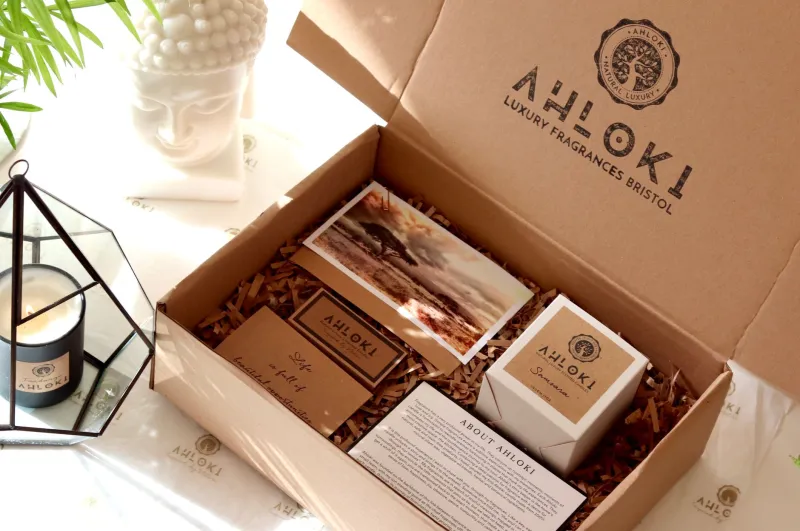
There is a moment that marketers have always understood intuitively but struggled to quantify: the instant a customer opens a package for the first time. For years, that moment was treated as a logistics endpoint—the successful conclusion of a fulfillment process. The packaging's job was to protect the product, satisfy dimensional requirements, and cost as little as possible.
A meaningful shift is underway among California's premium consumer brands. That same moment is now being engineered with the same intentionality applied to product development, pricing strategy, and customer experience design. And the businesses leading this shift are beginning to produce data that reframes the packaging investment question entirely.
The relevant metric is no longer cost per unit. It is contribution to customer lifetime value.
The Psychology Behind the Unboxing Response
Consumer psychology research has documented consistently that the physical experience of receiving and opening a product influences emotional associations with the brand in ways that digital interactions rarely replicate. Tactile quality, structural design, material weight, the sequence in which layers are revealed, and even the sound a package makes when opened all contribute to what researchers describe as perceived product value—a judgment that forms before the product itself is fully examined.
For premium brands, this dynamic is particularly consequential. A customer who pays a price premium has already made a psychological commitment. The unboxing experience either validates that commitment or introduces doubt. Packaging that communicates care, quality, and intentionality reinforces the customer's belief that they made a sound decision. Packaging that feels generic or misaligned with the product's positioning creates a dissonance that can affect satisfaction ratings, return rates, and the likelihood of a repeat purchase.
California's direct-to-consumer market has been an especially fertile environment for testing these dynamics, given the state's concentration of premium lifestyle, beauty, food, and wellness brands with direct relationships to their customers.
Calculating the ROI That Most Brands Are Missing
The challenge with packaging investment has always been attribution. A company can measure the cost of upgrading from a standard corrugated mailer to a custom-designed, premium unboxing structure with relative precision. Measuring the revenue impact of that upgrade requires a different analytical framework.
The brands generating the most compelling data are tracking several specific metrics in parallel. First, repeat purchase rate segmented by acquisition channel and first-order packaging type—allowing them to isolate the packaging variable's contribution to customer retention. Second, organic social sharing rates, which serve as a proxy for the word-of-mouth amplification that premium packaging generates at no incremental marketing cost. Third, customer satisfaction scores and product review sentiment, which frequently reference packaging even when the survey instrument does not ask about it directly.
When these data streams are combined and projected across a customer's expected lifetime value, the math often surprises executives who have been evaluating packaging as a cost line rather than a revenue driver. A packaging upgrade that adds a modest amount per unit frequently pays for itself many times over when its contribution to retention and referral is properly attributed.
The Sustainability Alignment Advantage
For California brands, there is an additional dimension that national brands in other markets do not experience with the same intensity: the alignment between premium packaging and sustainable material choices.
California consumers consistently rank environmental responsibility among their top considerations when evaluating premium brands. Packaging that communicates quality through materials perceived as responsible—recycled content, plant-based structures, minimal or plastic-free formats—does not create a trade-off between premium experience and sustainability values. It resolves one.
Brands that have invested in premium packaging built from certified sustainable materials report that the sustainability story becomes an extension of the unboxing narrative. Customers who might share an unboxing experience on social media are more likely to do so when the packaging gives them something worth narrating—and "this brand uses packaging made from recycled ocean plastic" is a more compelling story than "this brand uses a nice box."
The premium and the sustainable are not competing priorities in this context. They are mutually reinforcing.
Designing for Shareability Without Sacrificing Function
One practical tension that premium packaging programs must navigate is the relationship between aesthetic ambition and operational performance. Packaging that photographs beautifully but arrives damaged, proves difficult to open, or creates excessive waste generates a different kind of customer response—one that can spread as rapidly as positive unboxing content.
California brands that have built durable premium packaging programs approach this tension systematically. They test structural integrity across the full distribution journey, not just in controlled environments. They evaluate ease of opening as a design criterion alongside visual appeal. And they assess the waste experience—what the customer is left with after the product is removed—as part of the overall brand impression.
The goal is packaging that performs consistently across every customer touchpoint: the moment it arrives, the moment it is opened, the moment the product is revealed, and the moment the customer decides what to do with the materials afterward.
A Framework for Making the Investment Decision
For California brands evaluating a move toward premium packaging, the investment decision framework should begin with customer lifetime value data, not packaging cost data.
Start by establishing the current average lifetime value of a retained customer versus a one-time purchaser. Identify the retention rate differential between customers who report high satisfaction with their first-order experience and those who report lower satisfaction. Estimate the organic referral value generated by customers who share unboxing content—factoring in both the reach and the conversion rate of peer recommendations.
With those numbers established, the question becomes: what improvement in retention and referral would the packaging investment need to generate in order to deliver a positive return? In most cases, the threshold is lower than the initial cost comparison suggests.
The brands winning in California's premium consumer market have already worked through this calculation. Their packaging is not an expense they are managing down. It is an asset they are managing up.